By COGwriter
Although many act like they think otherwise, history and the Bible shows that there was no requirement for celibacy for bishops, presbyters, or other church leaders in the first or second centuries.
Actually, bishops and elders were supposed to have a wife and children to demonstrate they could handle a church as Paul wrote (Roman Catholic approved Rheims New Testament throughout except as otherwise noted):
1.FAITHFUL saying. If a man desire a Bishops office, he desireth a good work.
2. It behoveth therefore a Bishop to be irreprehensible, the husband of one wife,
sober, wise, comely, chaste, a man of hospitality, a teacher,
3. Not given to wine, no fighter, but modest, no quarreler, not covetous,
4. Well ruling his own house, chaving his children subject with all charity.
5. But if a man know not to rule his own house: how shall he have care of the Church of
God? (1 Timothy 3:1-5).5. For this cause left I thee in Crete, that thou shouldest reform the things that are
wanting, and shouldst ordain priests by cities, as I also appointed thee:
6. If any be without crime, the husband of one wife, having faithful children, not in the
accusations of riot, or not obedient.
7. For a Bishop must be without crime, as the steward of God: not proud, not angry, nor
given to wine, no striker, nor covetous of filthy lucre (Titus 1:5-7).
Note that the term translated as priest in verse 4, presbyter, simply means elder. Also notice that the Bishop is also allowed to be married. In Eastern Orthodox circles, while their priests are allowed to be married, their bishops are not.
The Orthodox who covet being a bishop will betray their wives to do so. They should also consider that the Bible warns:
13“This is another thing you do: you cover the altar of the LORD with tears, with weeping and with groaning, because He no longer regards the offering or accepts it with favor from your hand. 14“Yet you say, ‘For what reason?’ Because the LORD has been a witness between you and the wife of your youth, against whom you have dealt treacherously, though she is your companion and your wife by covenant. 15“But not one has done so who has a remnant of the Spirit. And what did that one do while he was seeking a godly offspring? Take heed then to your spirit, and let no one deal treacherously against the wife of your youth. 16“For I hate divorce,” says the LORD, the God of Israel, “and him who covers his garment with wrong,” says the LORD of hosts. “So take heed to your spirit, that you do not deal treacherously.” (Malachi 2:13-16, NASB)
What the Orthodox priests do to become bishops is treacherous.
Perhaps I should mention that the Fuller Theological Seminary historian and scholar Nathan Feldmeth believes that since Paul stated that he was a Pharisee, and that Pharisees had to be married, that Paul probably was married once--but that is not certain from scripture.
Paul specifically confirmed that the apostles had a wife and that he had a right to have a wife in the first century when he wrote:
4. Have not we power to eat and drink?
5. Have we not power to lead about a woman a sister, as also the rest of the Apostles, and
our Lords brethren, and Cephas?
6. Or I only and Barnabas have not we power to do this? (1 Corinthians 9:4-6).
While Polycrates confirmed this for the second century when he wrote
Among these are Philip, one of the twelve apostles, who fell asleep in Hierapolis; and his two aged virgin daughters, and another daughter, who lived in the Holy Spirit and now rests at Ephesus...All these observed the fourteenth day of the passover according to the Gospel, deviating in no respect, but following the rule of faith. And I also, Polycrates, the least of you all, do according to the tradition of my relatives, some of whom I have closely followed. For seven of my relatives were bishops; and I am the eighth. And my relatives always observed the day when the people put away the leaven. I, therefore, brethren, who have lived sixty-five years in the Lord (Eusebius. Church History. Book V, Chapter 25).
Polycrates probably would not have been one of a line of bishops if all bishops and church leaders practiced celibacy. Note that since the Apostle Philip had at least three daughters, he could not have practiced celibacy.
Now everyone is aware that Peter had a wife (see Matthew 8:14), but did you know that even Judas had a wife (cf. Acts 1:20, Psalm 109:8-9)?
Hippolytus notes that in the third century, celibacy was not required for the clergy (and least not by his rival, Roman Bishop Callistus):
About the time of this man, bishops, priests, and deacons, who had been twice married, and thrice married, began to be allowed to retain their place among the clergy (Hippolytus. Refutation of All Heresies, Book IX, Chapter VII. Excerpted from Ante-Nicene Fathers, Volume 5. Edited by Alexander Roberts & James Donaldson. American Edition, 1886. Online Edition Copyright © 2005 by K. Knight).
Even The Catholic Encyclopedia acknowledges that from the beginning, celibacy was not a requirement for church leaders:
Turning now to the historical development of the present law of celibacy, we must necessarily begin with St. Paul's direction (1 Timothy 3:2, 12, and Titus 1:6) that a bishop or a deacon should be "the husband of one wife". These passages seem fatal to any contention that celibacy was made obligatory upon the clergy from the beginning (Thurston H. Transcribed by Christine J. Murray. Celibacy of the Clergy. The Catholic Encyclopedia, Volume III. Copyright © 1908 by Robert Appleton Company. Online Edition Copyright © 2003 by K. Knight. Nihil Obstat, November 1, 1908. Remy Lafort, S.T.D., Censor. Imprimatur. +John Cardinal Farley, Archbishop of New York).
Celibacy became an ideal for the clergy in the East gradually, as it did in the West. In the fourth century we still find St. Gregory Nazianzen's father, who was Bishop of Nanzianzos, living with his wife, without scandal. But very soon after that the present Eastern rule obtained. It is less strict than in the West. No one can marry after he has been ordained priest (Paphnutius at the first Council of Nicaea maintains this; the first Canon of the Synod of Neocaesarea in 314 or 325, and Can. Apost., xxvi. The Synod of Elvira about 300 had decreed absolute celibacy for all clerks in the West, Can. xxxiii, ib., pp. 238-239); priests already married may keep their wives (the same law applied to deacons and subdeacons: Can. vi of the Synod in Trullo, 692), but bishops must be celibate. As nearly all secular priests were married this meant that, as a general rule, bishops were chosen from the monasteries, and so these became, as they still are, the road through advancement may be attained (Fortesque A. Transcribed by Marie Jutras. Eastern Monasticism. The Catholic Encyclopedia, Volume X. Copyright © 1911 by Robert Appleton Company. Online Edition Copyright © 2003 by K. Knight. Nihil Obstat, October 1, 1911. Remy Lafort, S.T.D., Censor. Imprimatur. +John Cardinal Farley, Archbishop of New York).
Here is a statement from that Synod of Elvira (about 305 A.D.) that is a little different than the above indicates:
We decree that all bishops, priests, and deacons, and all clerics engaged in ministry are forbidden entirely to live with their wives and to beget children: whoever shall do so shall be deposed from clerical dignity. (Bacchiocchi S. THE CATHOLIC PRIESTS CHILD SEX-ABUSE SCANDAL. Endtime Issues No. 82, 4 April 2002)
Thus the celibacy requirement for clergy did not occur until the fourth century. It, however, contradicts the biblical teaching on this matter and has never been a requirement for the true Church of God.
When the subject came up in the fourth century, a Greco-Roman bishop denounced it:
Paphnutius then was bishop of one of the cities in Upper Thebes: he was a man of such eminent piety, that extraordinary miraclas were done by him. In the time of the persecution he had been deprived of one of his eyes. The emperor honoured this man exceedingly, and often sent for him to the palace, and kissed the part where the eye had been torn out. So devout was the emperor Constantine. Having noticed this circumstance respecting Paphnutius, I shall explain. another thing which was wisely ordered in consequence of his advice, both for the good of the church and the honour of the clergy. It seemed fit to the bishops to introduce a new law into the church, that those who were in holy orders, I speak of bishops, presbyters, and deacons, should have no conjugal intercourse with the wives which they had married prior to their ordination. And when it was proposed to deliberate on this matter, Paphnutius having arisen in the midst of the assembly of bishops, earnestly entreated them not to impose so heavy a yoke on the ministers of religion: asserting that " marriage is honourable among all, and the nuptial bed undefiled;" so that they ought not to injure the church by too stringent restrictions. " For all men," said he, " cannot bear the practice of rigid continence ; neither perhaps would the chastity of each of their wives be preserved." He termed the intercourse of a man with his lawful wife chastity. It would be sufficient, he thought, that such as had previously entered on their sacred calling should abjure matrimony, according to the ancient tradition of the church: but that none should be separated from her to whom, while yet unordained, he had been legally united...The whole assembly of the clergy assented to the reasoning of Paphnutius (Socrates Scholasticus. Book 1, Chapter XI. A History of the Church in Seven Books: From the Accession of Constantine, A.D. 305, to the 38th Year of Theodosius II, Inluding a Period of 140 Years. Published by S. Bagster, 1844. Original from Harvard University, pp. 53-54)
So as late as the early fourth century, the idea of required celibacy was opposed by most of the clergy. (Note: Some have questioned the above account. But here is what one Orthodox scholar, L. Cleenewerch has written on that, “This statement would seem to settle the matter now as it did then, if it was not for the fact that the Paphnutius story is now under suspicion of being a legend invented by Socrates himself…It should be admitted, though, that the reasons for rejecting the ‘Paphnutius intervention’ are rather weak: the improbability of his presence at the Council, and the suspected sympathy of Socrates for the Novatians who opposed the lex continentiae. Yet, Socrates Scholasticus is recognized as a reliable and intellectually honest historian”, pp. 374,375.)
It also appears that celibate orders are unbiblical and not really part of the earliest traditions. Noted historian Latourette wrote:
"Although it has been prominent in the churches in which the majority of Christians have been enrolled, monasticism was unknown in the first two centuries of Christianity...In a least one place in the New Testament those who forbade Christians to marry and commanded them to abstain from some kinds of food were deemed untrue to the faith". (Latourette K.S. A History of Christianity, Volume 1: Beginnings to 1500. Harper Collins, San Francisco, 1975, p. 223).
The Church of Rome has long had problems with priests and celibacy as the following Catholic source admits:
September 5, 2018 ...
In the 11th century, there was a serious crisis that mirrors our present one. Rampant corruption manifested itself in widespread clerical immorality and homosexual practices. Pope Gregory VII and his collaborators, coming from a monastic tradition, purified the Church thoroughly, stringently enforcing the apostolic practice of clerical celibacy and creating the morally purified Church of the high medieval period.
By the 16th century, immorality had crept back into the ranks of the clergy, as members of the hierarchy, including a few popes, engaged regularly in activities that contravened their vows. https://aleteia.org/2018/09/05/when-did-priestly-celibacy-begin-anyway/
The Roman Catholic Church in the 20th century put this out in a paper:
HOLY VIRGINITY and that perfect chastity which is consecrated to the service of God is without doubt among the most precious treasures which the Founder of the Church has left in heritage to the society which He established. This assuredly was the reason why the Fathers of the Church confidently asserted that perpetual virginity is a very noble gift which the Christian religion has bestowed on the world. They rightly noted that the pagans of antiquity imposed this way of life on the Vestals only for a certain time; and that, although in the Old Testament virginity is ordered to be kept and preserved, it is only a previous requisite for marriage...Further, the Fathers of the Church, such as Cyprian, Athanasius, Ambrose, John Chrysostom, Jerome, Augustine, and many others, have sung the praises of virginity. And this doctrine of the Fathers, augmented through the course of centuries by the Doctors of the Church and the masters of asceticism, helps greatly either to inspire in the faithful of both sexes the firm resolution of dedicating themselves to God by the practice of perfect chastity and of persevering thus till death, or to strengthen them in the resolution already taken...And while this perfect chastity is the subject of one of the three vows which constitute the religious state, and is also required by the Latin Church of clerics in major orders (Pope Pius XII. Sacra Virginitas, Encyclical on Consecrated Virginity. Promulgated on March 25, 1954).
Thus, the Roman Church, though admitting that permanent virginity is not a biblical position, wants to insist on this.
1 Timothy 4:1-3 warns that some will forbid marriage, which is what the Roman Church seems to be doing here.
I would also add here, that telling the faithful to have fish, and not other meats on Friday, seems to be related to the second statement in 1 Timothy 4 (a related article of interest The New Testament and Unclean Meats).
Monasticism and Women
The first known claim of a group of people apparently associated with "orthodox" Christianity comes from Alexandria. Eusebius wrote:
7. Philo bears witness to facts very much like those here described and then adds the following account: "Everywhere in the world is this race found. For it was fitting that both Greek and Barbarian should share in what is perfectly good. But the race particularly abounds in Egypt, in each of its so-called nomes, and especially about Alexandria...
9. And then a little further on, after describing the kind of houses which they had, he speaks as follows concerning their churches, which were scattered about here and there: "In each house there is a sacred apartment which is called a sanctuary and monastery, where, quite alone, they perform the mysteries of the religious life. They bring nothing into it, neither drink nor food, nor any of the other things which contribute to the necessities of the body, but only the laws, and the inspired oracles of the prophets, and hymns and such other things as augment and make perfect their knowledge and piety."
19. For they say that there were women also with those of whom we are speaking, and that the most of them were aged virgins who had preserved their chastity, not out of necessity, as some of the priestesses among the Greeks, but rather by their own choice, through zeal and a desire for wisdom. And that in their earnest desire to live with it as their companion they paid no attention to the pleasures of the body, seeking not mortal but immortal progeny, which only the pious soul is able to bear of itself (Eusebius. Church History, Book II, Chapter XVII. Translated by Arthur Cushman McGiffert. Excerpted from Nicene and Post-Nicene Fathers, Series Two, Volume 1. Edited by Philip Schaff and Henry Wace. American Edition, 1890. Online Edition Copyright © 2004 by K. Knight).
In other portions of the above account Eusebius claims that Philo (c. late 1st century) reported that those in Alexandria were ascetic, had mysteries, seem to have been gnostics (ones who claimed to have special knowledge/wisdom was essential for salvation), had some promotion of celibacy, and allegorized scripture. This seems to have been where a major departure from the true faith occurred (more details on this can be found in the article on Apostolic Succession).
Furthermore, one of the first groups affiliated with Christianity in any form to endorse a portion of the monastic lifestyle was the heretical Marcionites, a group that Catholics, Protestants, Orthodox, and others consider to have been heretics. Latourette notes:
...the Marcionites forbade marriage (Latourette K.S. A History of Christianity, Volume 1: Beginnings to 1500. Harper Collins, San Francisco, 1975, p. 224).
Hence the idea of monasticism came from pagans and heretics and was not in any legitimate Christian churches in the second century. The heretic Marcion was denounced by Polycarp of Smyrna (please see the article Marcion: The First Protestant?).
Furthermore, it should be noted that celibacy was encouraged/required within most monastic circles (there is no such equivalent in the Churches of God) and it is claimed to have come from Egypt. The Catholic Encyclopedia notes:
The first home of Christian monasticism is the Egyptian desert. St. Anthony (270-356) is counted the father of all monks. His fame attracted many others, so that under Diocletian and Constantine there were large colonies of monks in Egypt, the first laurai ((Fortesque A. Transcribed by Marie Jutras. Eastern Monasticism. The Catholic Encyclopedia, Volume X. Copyright © 1911 by Robert Appleton Company. Online Edition Copyright © 2003 by K. Knight. Nihil Obstat, October 1, 1911. Remy Lafort, S.T.D., Censor. Imprimatur. +John Cardinal Farley, Archbishop of New York).
Celibacy was from the beginning an essential note of monasticism (Fortesque A. Transcribed by Marie Jutras. Eastern Monasticism. The Catholic Encyclopedia, Volume X. Copyright © 1911 by Robert Appleton Company. Online Edition Copyright © 2003 by K. Knight. Nihil Obstat, October 1, 1911. Remy Lafort, S.T.D., Censor. Imprimatur. +John Cardinal Farley, Archbishop of New York).
Part of the reasons for this is based upon the logic of such teachers as John Chrysostom (although the pagans came up with it first). But John Chrysostom did not hold a very high view of women. Within the monastic system of John Chrysostom's day, one had a year from when one decided to be a monk and when one finally became a monk (in the first year, the potential monk was considered to be a novice).
Well one such novice was a man named Theodore. Theodore became interested in a woman named Hermione and wanted to leave the monastery, before his first year was up, and marry her. This upset John greatly and here is part of his long letter to Theodore on this subject:
I know that thou art now admiring the grace of Hermione, and thou judgest that there is nothing in the world to be compared to her comeliness; but if you choose, O friend, you shall yourself exceed her in comeliness and gracefulness, as much as golden statues surpass those which are made of clay.
For if beauty, when occurs in the body, so fascinates and excites the minds of most men, when the soul is refulgent with it what can match beauty and grace of this kind? For the groundwork of this corporeal beauty is nothing else but phlegm, and blood, and humor, and bile, and the fluid of masticated food. For by these things both eyes and cheeks, and all the other features, are supplied with moisture; and if they do not receive that moisture, daily skin becoming unduly withered, and the eyes sunken, the whole grace of the countenance forthwith vanishes; so that if you consider what is stored up inside those beautiful eyes, and that straight nose, and the mouth and the cheeks, you will affirm the well-shaped body to be nothing else than a whited sepulchre; the parts within are full of so much uncleanness. Morever when you see a rag with any of these things on it, such as phlegm, or spittle you cannot bear to touch it with even the tips of your fingers, nay you cannot even endure looking at it; and yet are you in a flutter of excitement about the storehouses and depositories of these things? But thy beauty was not of this kind, but excelled it as heaven is superior to earth; or rather it was much better and more brilliant than this (John Chysostom.Two Exhortations to Theodore, Chapter 14. Excerpted from Nicene and Post-Nicene Fathers, Series One, Volume 9. Edited by Philip Schaff, D.D., LL.D. American Edition, 1889. Online Edition Copyright © 2004 by K. Knight).
Essentially, John Chrysostom appears to be saying that a celibate monastic life is better than marriage, and that a woman is no better than the type of phlegm one would find on a filthy rag. It is my opinion, that this, and similar views of certain Roman associated leaders about women is what led to the notion of a celibate clergy.
Interestingly, Judeo-Christians were noted for not supporting celibacy some time in the fourth century (Ephiphanius, Panarion, Book I. Section II, Chapter 30, Verse 2,6, p. 132), perhaps this is because they opposed what the Greco-Romans were now doing and advocating.
The Fruits of Celibacy
The Bible warns:
Now the Spirit expressly says that in latter times some will depart from the faith, giving heed to deceiving spirits and doctrines of demons, speaking lies in hypocrisy, having their own conscience seared with a hot iron, forbidding to marry (1 Timothy 4:1-3).
Why would forbidding to marry be a doctrine of demons?
Probably two reasons. The first, is that demons themselves, like the non-fallen angels, do not marry (Matthew 22:30, NKJV).
The second is that demons are against what God taught. Notice what God taught from the beginning:
And the LORD God said, "It is not good that man should be alone; I will make him a helper comparable to him" (Genesis 2:18, NKJV).
Since a man not being married to a woman was the first thing the Bible records was "not good", the demons must have realized early on that the "fruits" of celibacy would be disasterous.
Notice:
William Lobdell, who gave the Los Angeles Times first-class coverage of the Catholic Church’s sex abuse scandal in California, threw in the towel with a wrenching story of his own struggle with organised religion. His farewell story in July, “Religion beat became a test of faith“ was a moving testimony of a journalist who started off as a Presbyterian, was active with evangelicals and seriously considered becoming a Catholic.
But, during his eight years on the beat, the Catholic clerical sex abuse scandal put him off religion so badly that he lost his faith altogether. For an example of what he came across, take a look at Missionary’s Dark Legacy, a powerful story from 2005 about the trail of sexual abuse a Catholic missionary left behind after seven years among the Eskimos. Nearly every boy in the settlement was abused. (Burnout on the God beat - second top religion writer calls it quits. Reuters, November 16, 2007. http://www.wwrn.org/article.php?idd=26895&con=55&sec=75)
A grand jury in Pennsylvania released a 1,300-word {should be 1356 pages} report Tuesday detailing allegations that the Roman Catholic Church spent decades covering up sexual abuse claims against 300 “predator priests” who are said to have targeted nearly 1,000 children.
The report covers 70 years of alleged abuse and the lengths that church officials went to cover up the accusations, using what investigators described in the report as a “a playbook for concealing the truth.”
Special agents identified several common practices across the files from the six dioceses they investigated that kept the accusations within the church, and avoided recording any criminal identifications in the documents.
The report lays out what it said were mechanisms for shielding accused priests from legitimate punishment, including:
- Using euphemisms for the sexual assaults. “Never say ‘rape’; say ‘inappropriate contact’ or ‘boundary issues.'”
- Choosing fellow clergy members, not unbiased professionals to “ask inadequate questions and then make credibility determinations about the colleagues with whom they live and work.”
- “For an appearance of integrity, send priests for ‘evaluation’ at church -run psychiatric treatment centers,” as the priest’s diagnosis would be mostly based on his own “‘self -reports,’ regardless of whether the priest had actually engaged in sexual contact with a child.”
- To completely conceal any wrongdoing even if the priest is removed, “don’t say why. Tell his parishioners that he is on “sick leave,” or suffering from ‘nervous exhaustion.’ Or say nothing at all.”
- “Even if a priest is raping children, keep providing him housing and living expenses, although he may be using these resources to facilitate more sexual assaults.”
- If a predator’s conduct becomes known to the community, don’t remove him from the priesthood to ensure that no more children will be victimized. Instead, transfer him to a new location where no one will know he is a child abuser.”
- “Finally and above all, don’t tell the police,” though sexual abuse of minors is a universally punishable crime, “don’t treat it that way; handle it like a personnel matter, ‘in house,'” the text said, according to the report.
The report goes on to list 300 cases of individual priests from Harrisburg, Pittsburgh, Allentown, Scranton, Erie and Greensburg dioceses with names and graphic details from their accusers. https://www.thisisinsider.com/grand-jury-report-catholic-church-playbook-sexual-abuse-2018-8
I actually had a Catholic woman in November 2007 tell me that a friend of hers had been abused by a Catholic priest, but that she felt that celibacy was a good thing because otherwise the church would have to support the priests' wives. That to me, is not a valid reason for celibacy.
Of course, as the sex scandals and pedophilia issues have shown, not all the clergy keeps to celibacy. And this was also the case with many popes. Here is an account of one:
Pope Alexander VI (1492-1503) has the notorious distinction of being the most corrupt pope of the Renaissance period. His dissolute life-style and his determination to advance the political fortunes of his numerous children, are a trade mark of his Pontificate. The Pope himself acknowledged the legitimacy of several of his children. (Bacchiocchi S. THE CATHOLIC PRIESTS CHILD SEX-ABUSE SCANDAL. Endtime Issues No. 82, 4 April 2002)
The Germany-based Deutsche Welle reported the following:
Pope adviser urges rethink on Catholic celibacy
5 October 2018
Cardinal Reinhard Marx has called for a "frank discussion" within the Roman Catholic Church on homosexuality, abuse of authority and the "celibacy and the training of priests" as part of the response to clergy sex abuse scandals.
"If no corrective action is taken by the church — and we are working on it, we must work on it — the state has no other choice but to intervene," Marx said on Friday, referring to ongoing investigations of church leaders in places like Chile, the United States and elsewhere. ...
Anselm Bilgri, who until 2004 was a Benedictine monk in Germany, said in an interview with German newspaper Die Zeit that "there are estimates that one-third of priests are heterosexually active, one-third homosexually, and one-third who sincerely attempt to comply [by observing celibacy]."
Bilgri, the author of a book published last month in which he calls for the end of celibacy in the priesthood, said belief in the practice was no longer shared by many people, resulting in many priests living out their sexual urges in secret. https://www.dw.com/en/pope-adviser-urges-rethink-on-catholic-celibacy/a-45776011
Wow! The statistics are really bad for the Roman Catholic priesthood.
In 2019, a cardinal and player on the international scene was defrocked:
February 16, 2019
The Vatican said Saturday that Pope Francis has defrocked disgraced former U.S. cardinal Theodore McCarrick.
In July of last year, Francis accepted McCarrick's resignation from the College of Cardinals following allegations he had sexually abused minor and adult seminarians over a period of decades.
The Vatican said in a statement that in January 2019 it had found McCarrick guilty of ". . . solicitation in the Sacrament of Confession and sins against the Sixth Commandment with minors and with adults, with the aggravating factor of the abuse of power." (The Sixth Commandment says 'Thou shall not commit adultery' and is one of the Ten Commandments the Bible says were given by God. The Commandments are fundamental to Judaism and Christianity.)
McCarrick appealed the decision expelling him from the priesthood, but it was upheld and McCarrick was notified of the decision Friday. .
The Vatican statement said its decision "is definitive and admits of no further recourse or appeal."
McCarrick had been a highly respected and longtime ambassador of the Catholic Church was was a confident of popes and U.S. presidents.
The 88-year-old McCarrick was ordained a priest in 1958. His appointments included: auxiliary bishop of New York, bishop of Metuchen, archbishop of Newark, and archbishop of Washington.
In 2001, McCarrick became a cardinal. https://www.voanews.com/a/vatican-expels-former-cardinal-mccarrick-/4789653.html
So, another leading Roman Catholic leader is accused of being a habitual adulterer and homosexual pedophile (see Cardinal Theodore McCarrick and the Homosexual Matrix).
Sadly, sexual abuse and perversion has been among among Roman Catholic clerics (e.g. see ‘Former Vatican official calls for Pope’s resignation amid sex abuse scandal’).
How prevalent is the homosexual situation?
A new book says it is more rampant than most would believe.
CNN reported the following:
Salacious new book says homosexuality is rampant at the Vatican
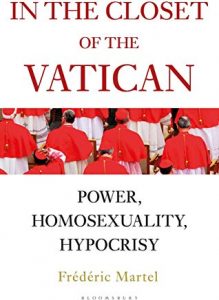
Early in his salacious new book about homosexuality in the Vatican, the French journalist Frederic Martel asks a source to estimate the number of Vatican clergy who are "part of this community, all tendencies included."
"I think the percentage is very high," says the source, identified as an Italian journalist who left the Vatican and the priesthood after he was discovered viewing gay sex websites on his Vatican computer. "I'd put it around 80%."
That estimate from Martel's book, which is scheduled to be published on February 21 in eight languages and 20 countries, has already made international headlines. CNN received an early copy of the book, whose English title is "In the Closet of the Vatican," through a source. ...
He says he talked to 1,500 sources, including 41 cardinals, 52 bishops and 45 current and former Vatican ambassadors, or nuncios, during his four years of reporting the book.
But is that 80% figure really true? And what, exactly, does "all tendencies included" mean? ...
Martel calls the Vatican "one of the biggest gay communities in the world" where "50 shades of gay" lurk beneath the pious surface. This secret underworld communicates in coded messages: In Vatican parlance, he writes, to be gay is "to be part of the parish," an entendre that blends the sexual and sacred. https://edition.cnn.com/2019/02/14/europe/vatican-book-analysis/index.html
While CNN is correct to wonder how the 80% figure came about and its meaning, the reality is that sexual immorality is a big problem for the Church of Rome.
What would happen if the Vatican eliminated all homosexual priests. Notice the following from the pro-Catholic Crux:
NEW YORK - Allegations that disgraced ex-Cardinal Theodore McCarrick engaged in sex with adult seminarians have inflamed a long-running debate about the presence of gay men in the Roman Catholic priesthood.
Some conservatives are calling for a purge of all gay priests, a challenging task given that they are believed to be numerous and few are open about their sexual orientation. Moderates want the Church to eliminate the need for secrecy by proclaiming that gay men are welcome if they can be effective priests who commit to celibacy.
Among the most outspoken moderates is Father James Martin, a Jesuit priest and writer whose book, Building a Bridge, envisions a path toward warmer relations between the Catholic Church and the LGBT community.
“The idea of a purge of gay priests is both ridiculous and dangerous,” Martin said in an email. “Any purge would empty parishes and religious orders of the thousands of priests (and bishops) who lead healthy lives of service and faithful lives of celibacy.”
That outlook infuriates some conservative Catholics.
Citing McCarrick’s case, Michael Hichborn, president of an institute that promotes traditional Catholic teaching, says there must be a “complete and thorough removal of all homosexual clergymen from the Church.”
“It is going to be difficult and will likely result in a very serious priest shortage,” Hichborn said. “But it’s definitely worth the effort.” https://cruxnow.com/church-in-the-usa/2018/08/20/cardinal-mccarrick-scandal-inflames-debate-over-gay-priests/
This should make it clear to Catholics that their clergy is NOT filled with holy men.
Plus, in many cases, this has resulted in pedophilia.
The Apostle Paul warned:
9 Do you not realise that people who do evil will never inherit the kingdom of God? Make no mistake -- the sexually immoral, idolaters, adulterers, the self-indulgent, sodomites,
10 thieves, misers, drunkards, slanderers and swindlers, none of these will inherit the kingdom of God. (1 Corinthians 6:9-10, New Jerusalem Bible--a Roman Catholic approved translation)
Note: Sodomites are homosexuals.
It should be clear that those that have taken the vow of celibacy have not demonstrated that this leads them to be better spiritually.
It should be obvious to anyone with eyes to see that forced clerical celibacy does not work.
The celibacy doctrine of Rome has resulted in many thousands, if not millions, of lives being ruined for a practice that the Bible warns against.
The Church of Rome Admits that Celibacy was Not an Original Practice and Can Change Again
In the 21st century, the Church of Rome has admitted that celibacy was not the original position of the Apostles and that it might change back:
Pope Benedict XVI's choice as the church's top official for priests has said that celibacy "is not a dogma," and that the Catholic church "can reflect" on the subject.
The explosive character of the issue, however, was reflected in a "clarification" issued in the name of the cardinal by the Vatican Press Office Dec. 4.
Cardinal Claudio Hummes, 72, of Sao Paulo, Brazil, was nominated prefect of the Congregation for Clergy Oct. 31. He made the comments as he left for Rome in an interview with the Brazilian publication Estado de Sao Paulo.
"Even if celibates are part of our history and of Catholic culture, the church can reflect on the question of celibacy, because it's not a dogma but a disciplinary norm," Hummes said.
Hummes, a Franciscan, recalled that several apostles were married, and that the discipline of priestly celibacy in the Western church developed several centuries after the institution of the priesthood itself..."In the church, it has always been clear that the obligation of celibacy for priests is not a dogma, but a disciplinary norm. It is also clear that this is true for the Latin church, but not for the Oriental rites, where it is normal that priests are married in the communities in union with the Catholic church..." (Allen JL. Curial cardinal says celibacy can be discussed. National Catholic Reporter, Dec 15, 2006).
Thus, celibacy can be concluded to be an unbiblical requirement that Rome imposed outside of the Bible.
In 2017, Pope Francis seeming authorized debate on celibacy for the priesthood.
Furthermore, notice the following:
March 30, 2026
The Vatican has reaffirmed its support for the Anglican ordinariates, confirming that these communities have a permanent and valued place within the Catholic Church.
On March 24, the Dicastery for the Doctrine of the Faith issued a document titled “Characteristics of the Anglican Heritage as Lived in the Ordinariates Established Under the Apostolic Constitution Anglicanorum Coetibus.” ...
The Anglican ordinariates trace their origins to 1980, when St. John Paul II approved the Pastoral Provision, which allowed married former Episcopal clergy to be ordained as Catholic priests and permitted the formation of Anglican-use communities within existing Roman Catholic dioceses.
This was the first major step in preserving elements of Anglican liturgical and spiritual heritage for those entering full communion with Rome.
In 2009, Pope Benedict XVI took this further by issuing the apostolic constitution Anglicanorum Coetibus, which created the personal ordinariates as permanent structures within the Catholic Church. https://www.ewtnnews.com/vatican/vatican-affirms-future-of-anglican-ordinariates-a-precious-gift-and-a-treasure-to-be-shared
So, we see that the allowance of marriage has been accepted related to some now part of the Roman Catholic priesthood.
Conclusion
It is clear from the Bible, as well as Roman Catholic writings, that the original apostles, presbyters, and bishops were allowed to be married. It is also clear that the idea of celibacy for church leaders did not enter mainstream churches until probably the late third century--and it probably came from Egypt, by those who did not practice biblical Christianity.
Since it this type of celibacy was added by men, and not God, it is not required for true church leaders today. Even various Roman Catholic scholars know this.
An article of related interest may be Did The Early Christian Church Practice Monasticism?
B. Thiel, Ph.D. Was Celibacy Required for Early Bishops or Presbyters? www.cogwriter.com.celibacy.htm (c) 2006/2007/2008/2009/2011/2018/2019 /2026 0401