Some Anglicans Starting to Accept Pope’s Offer of Unification
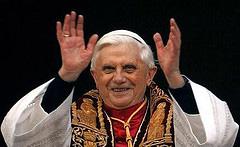
Pope Benedict XVI
Some Anglicans are accepting the Vatican’s offer of unity:
Anglican Province Accepts Pope’s Offer
Posted by EDWARD PENTIN
Thursday, November 05, 2009 1:46 PM
The Traditional Anglican Communion’s province in Great Britain has become the first to accept Pope Benedict XVI’s Apostolic Constitution for Anglicans.
http://www.ncregister.com/daily/anglican_province_accepts_popes_offer/#When:17:46:13Z
How many Anglicans, overall, will accept the offer is still unknown. Some will, and others will not.
Now this offer included a little compromising on Rome’s part. For example, the Vatican is allowing the Anglicans to keep much of their liturgy and their leadership. And while there always has been an order within eastern Catholicism that allowed married priests, this has not been the case in the Latin (church of Rome in the west) for many centuries. Of course, early Christian leaders (including bishops) were often married, as the Bible endorses that (1 Timothy 3:2). But Rome has tended to change from some of those practices.
This unification is an indication to me, at least, that compromise on the behalf of the Vatican will likely be involved as other groups (the Orthodox and Lutherans come to immediate mind) get closer with the Church of Rome.
Some articles of possibly related interest include the following:
Why Should American Catholics Should Fear Unity with the Orthodox? Are the current ecumenical meetings a good thing or will they result in disaster?
Was Celibacy Required for Early Bishops or Presbyters? Some religions suggest this, but what does the Bible teach? What was the practice of the early church?
Did the Early Christian Church Practice Monasticism? Does God expect or endorse living in a monastery or nunnery?
Were the Early Duties of Elders/Pastors Mainly Sacramental? What was there Dress? Were the duties of the clergy primarily pastoral or sacramental? Did the clergy dress with special liturgical vestments? Can “bishops” be disqualified as ministers of Christ based on their head coverings?
The History of Early Christianity Are you aware that what most people believe is not what truly happened to the true Christian church? Do you know where the early church was based? Do you know what were the doctrines of the early church? Is your faith really based upon the truth or compromise?
 |
Tweet |
|