By COGwriter
The night after Passover, beginning with the evening of the 15th day of the first month on the Hebrew calendar, is known in many Church of God circles as the Night to Be Observed. That name is based on the following scripture:
42 It is a night to be much observed unto the Lord for bringing them out from the land of Egypt: this is that night of the Lord to be observed of all the children of Israel in their generations. (Exodus 12:42, KJV)
As the above shows, it can be called the night to be MUCH observed.
Furthermore, notice the following scriptures:
17 So you shall observe the Feast of Unleavened Bread, ... (Exodus 12:17)
3 And Moses said to the people: "Remember this day in which you went out of Egypt, out of the house of bondage; for by strength of hand the Lord brought you out of this place. No leavened bread shall be eaten. 4 On this day you are going out, in the month Abib. (Exodus 13:3-4 NKJV)
3 You shall eat no leavened bread with it; seven days you shall eat unleavened bread with it, that is, the bread of affliction (for you came out of the land of Egypt in haste), that you may remember the day in which you came out of the land of Egypt all the days of your life. (Deuteronomy 16:3 NKJV)
Yet, the night after the biblical Passover is observed by many Jews as Passover as they seem to have forgotten there were were two different events. As it turns out, some Jews keep Passover on two consecutive nights. Yet those of us in the Continuing Church of God keep the two consecutive nights, but as observance of two different events.
Jews seem to consider two nights as Passover, with the bulk observing the 15th.
The first night, which occurs right after sunset on the beginning of the 14th of Nisan/Abib, is Passover. On Passover, baptized members partake of small portions of unleavened bread and wine that were symbols of the body and blood of the true Lamb of God, Jesus Christ (for more on Passover, please see Passover and the Early Church).
The second night, which occurs right after sunset on the beginning of the 15th of Nisan/Abib, is commonly called "the night to be much observed" (Exodus 12:42, KJV/ASV), and is actually the first official day of the seven days of unleavened bread. Though the entire 8 days is sometimes referred to in the Bible as "Passover" or the days of unleavened bread.
Because of this, some Jews got confused, forgot the distinction, and some now observe these two consecutive evenings as Passover (though most only observe the second evening, and call it Passover).
The Jews erroneously call the 15th Passover. Notice scriptural proof in the Jewish Encyclopedia that the Jews should realize that Passover is on the 14th and something else happens on the 15th:
Passover . . . The festival commemorates the deliverance of Israel's first-born from the judgment wrought on those of the Egyptians (Ex. xii. 12-13; comp. Ex. xiii. 2, 12 et seq.), and the wondrous liberation of the Hebrews from Egyptian bondage (Ex. xii. 14-17). As such, it is identical with the Maẓẓot (, Ex. xii. 17; , Lev. xxiii. 5-6) festival, and was instituted for an everlasting statute (Ex. xii. 14). Lev. xxiii., however, seems to distinguish between Passover, which is set for the fourteenth day of the month, and (the Festival of Unleavened Bread; ἑορτή τῶν ἀζύμων, Luke xxii. 1; Josephus, "B. J." ii. 1, § 3), appointed for the fifteenth day. (Jewish Encyclopedia of 1906)
Because Jews tend to emphasize the departure from Egypt and rely on certain non-biblical traditions, they tend to mostly observe only the second date--and erroneously call it Passover.
Yet, the 15th is NOT Passover.
But what is the meaning of this evening, called the night to be observed? Why do we in the Church of God observe it? A related video is available and is titled The Night to Be Much Observed.
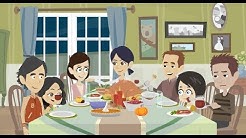
We have an animation titled: Night to Be Observed.
Here is what we wrote about it on YouTube:
What is it? When is it? The KJV refers to it as “THE NIGHT TO BE MUCH OBSERVED.” This scripture-packed animation includes background and specific information related to the children of Israel. It also gives some of the Old and New Testament prophetic ramifications of this event. How the NTBO is typically observed is also covered. The animation also includes a chart of scriptures and biblical dates to determine when that NTBO actually is. Furthermore, the animation provides information from the “Jewish Encyclopedia” which, through scripture, shows that many Jews have confused Passover with the “night to be observed.” This is a great animation to give background on the NTBO and is also appropriate to be watched on the NTBO.
Here is a link: Night to Be Observed.
Before getting going further, perhaps two questions should be dealt with.
Related to the Passover the Bible teaches:
26 And it shall be, when your children say to you, 'What do you mean by this service?' 27 that you shall say, 'It is the Passover sacrifice of the Lord, who passed over the houses of the children of Israel in Egypt when He struck the Egyptians and delivered our households.'" (Exodus 12:26-27, NKJV throughout, except when otherwise noted)
The above is a question about Passover.
But that differs from the Night to Be Observed.
Notice something else that the Bible teaches:
20 "When your son asks you in time to come, saying, 'What is the meaning of the testimonies, the statutes, and the judgments which the Lord our God has commanded you?' 21 then you shall say to your son: 'We were slaves of Pharaoh in Egypt, and the Lord brought us out of Egypt with a mighty hand; 22 and the Lord showed signs and wonders before our eyes, great and severe, against Egypt, Pharaoh, and all his household. 23 Then He brought us out from there, that He might bring us in, to give us the land of which He swore to our fathers. 24 And the Lord commanded us to observe all these statutes, to fear the Lord our God, for our good always, that He might preserve us alive, as it is this day. 25 Then it will be righteousness for us, if we are careful to observe all these commandments before the Lord our God, as He has commanded us.' (Deuteronomy 6:20-25)
The above would seem to be very appropriate for the Night to be Much Observed. And spiritually, the purpose of the Holy Days and testimonies for Christians is to help preserve us spiritually.
Yet, because of Jewish tradition, both of those questions are normally asked at Passover, despite the fact that these are two different questions.
Consider that since the Jews had meals on both occasions, and that they connect Passover a lot with actually leaving Egypt, they seem to have lost the distinction between the two days.
But as the Bible says, Passover has to do with the sacrifice, its primary emphasis was not leaving Egypt--that leaving Egypt (spiritually) is the emphasis of the Night to be Much Observed.
The Night to Be Observed reminded the Jews that they should be thankful for God’s deliverance from the bondage of Egyptian slavery (Exodus 12:42), and teaches Christians to be thankful for the reason from the bondage of sin (John 8:34-36).
The Night to Be Observed pictures our taking action to leave spiritual Egypt (cf. Revelation 11:8)--this is something that should cause Christians to rejoice.
Exodus chapter 12 contains the account of the first Passover. It begins with God instructing Moses and Aaron about what they were to teach the people and what was going to happen. This instruction included the taking out of a lamb on the tenth day of this first month, called Abib, and saving it up until the 14th day when it was to be killed at twilight — the beginning of the 14th.
Instructions about the Passover:
21 Then Moses called for all the elders of Israel and said to them, "Pick out and take lambs for yourselves according to your families, and kill the Passover lamb. 22 And you shall take a bunch of hyssop, dip it in the blood that is in the basin, and strike the lintel and the two doorposts with the blood that is in the basin. And none of you shall go out of the door of his house until morning. (Exodus 12:21-22)
The expression “until morning” comes from Hebrew word meaning “the breaking through of daylight,” “coming of daylight,” or the “coming of sunrise.”
So, Israelites did not go out of their homes until after dawn on the 14th. What happened earlier that night?
29 And it came to pass at midnight that the Lord struck all the firstborn in the land of Egypt, from the firstborn of Pharaoh who sat on his throne to the firstborn of the captive who was in the dungeon, and all the firstborn of livestock. 30 So Pharaoh rose in the night, he, all his servants, and all the Egyptians; and there was a great cry in Egypt, for there was not a house where there was not one dead. 31 Then he called for Moses and Aaron by night, and said, "Rise, go out from among my people, both you and the children of Israel. And go, serve the Lord as you have said. 32 Also take your flocks and your herds, as you have said, and be gone; and bless me also." 33 And the Egyptians urged the people, that they might send them out of the land in haste. For they said, "We shall all be dead." (Exodus 12:29-33)
Notice that Moses and Aaron did NOT go out during the night – that is an incorrect assumption (see Exodus 10:28-29) that many have:
28 Then Pharaoh said to him, "Get away from me! Take heed to yourself and see my face no more! For in the day you see my face you shall die!"
29 So Moses said, "You have spoken well. I will never see your face again." (Exodus 10:28-29)
After the death of the firstborn, Israelites had a number of tasks to complete before leaving Egypt. They were to stay inside their houses until morning, the breaking of daylight, burn the remains of the lambs that had not been eaten, go to the villages and cities where the Egyptians lived and ask them to give them silver, gold, and clothing, gather and load up whatever possessions they were to carry and with their herds and flocks travel on foot, for some as much as twenty miles, to Rameses where their organized journey out of Egypt was to begin. Notice:
34 And the people took their dough before it was leavened, their kneadingtroughs being bound up in their clothes upon their shoulders. 35 And the children of Israel did according to the word of Moses; and they borrowed of the Egyptians jewels of silver, and jewels of gold, and raiment: 36 And the Lord gave the people favour in the sight of the Egyptians, so that they lent unto them such things as they required. And they spoiled the Egyptians. 37 And the children of Israel journeyed from Rameses to Succoth, about six hundred thousand on foot that were men, beside children. 38 And a mixed multitude went up also with them; and flocks, and herds, even very much cattle. 39 And they baked unleavened cakes of the dough which they brought forth out of Egypt, for it was not leavened; because they were thrust out of Egypt, and could not tarry, neither had they prepared for themselves any victual. (Exodus 12:34-39 --King James Version)
The night to be observed is the night that they left Rameses.
After doing what God them to do, they left.
Notice what they were to observe:
17 And ye shall observe the feast of unleavened bread; for in this selfsame day have I brought your hosts out of the land of Egypt; therefore shall ye observe this day throughout your generations by an ordinance for ever. (Exodus 12:17, Jewish Publication Society, 1917)
Notice what happened from the time of the killing of the firstborn until they were actually able to leave:
31 And he called for Moses and Aaron by night and said: ‘Rise up, get you forth from among my people, both ye and the children of Israel; and go, serve the LORD, as ye have said. 32 Take both your flocks and your herds, as ye have said, and be gone; and bless me also.’ 33 And the Egyptians were urgent upon the people, to send them out of the land in haste; for they said: ‘We are all dead men.’ 34 And the people took their dough before it was leavened, their kneading-troughs being bound up in their clothes upon their shoulders. 35 And the children of Israel did according to the word of Moses; and they asked of the Egyptians jewels of silver, and jewels of gold, and raiment. 36 And the LORD gave the people favour in the sight of the Egyptians, so that they let them have what they asked. And they despoiled the Egyptians. 37 And the children of Israel journeyed from Rameses to Succoth, about six hundred thousand men on foot, beside children. 38 And a mixed multitude went up also with them; and flocks, and herds, even very much cattle. 39 And they baked unleavened cakes of the dough which they brought forth out of Egypt, for it was not leavened; because they were thrust out of Egypt, and could not tarry, neither had they prepared for themselves any victual. 40 Now the time that the children of Israel dwelt in Egypt was four hundred and thirty years. 41 And it came to pass at the end of four hundred and thirty years, even the selfsame day it came to pass, that all the host of the LORD went out from the land of Egypt. 42 It was a night of watching unto the LORD for bringing them out from the land of Egypt; this same night is a night of watching unto the LORD for all the children of Israel throughout their generations. (Exodus 12:31-42, JPS)
Notice that Pharaoh, after midnight, calls for Moses to tell the children of Israel to leave Egypt (verses 29-31). The Israelites then gather at Rameses during the daylight part of the 14th (verses 33-37).
Notice clearly when this was:
3 And they journeyed from Rameses in the first month, on the fifteenth day of the first month; on the morrow after the passover the children of Israel went out with a high hand in the sight of all the Egyptians, 4 while the Egyptians were burying them that the LORD had smitten among them, even all their first-born; upon their gods also the LORD executed judgments. 5 And the children of Israel journeyed from Rameses, and pitched in Succoth. (Numbers 33:3-5, JPS)
They leave Rameses the night of the 15th and encamp at Succoth (Deut. 16:1; Num 33:3; Ex. 12:37) on the weekly Sabbath during this first Feast of Unleavened Bread.
Exodus 13:18 tells us, “the children of Israel went up in orderly ranks out of the land of Egypt.”
It’s remarkable that they were able to do accomplish this all by the night after the Passover.
Now notice:
40 Now the sojourn of the children of Israel who lived in Egypt was four hundred and thirty years. 41 And it came to pass at the end of the four hundred and thirty years — on that very same day — it came to pass that all the armies of the LORD went out from the land of Egypt. 42 It is a night of solemn observance to the LORD for bringing them out of the land of Egypt. This is that night of the LORD, a solemn observance for all the children of Israel throughout their generations. (Exodus 12:40-42)
42 It is a night to be much observed unto the Lord for bringing them out from the land of Egypt: this is that night of the Lord to be observed of all the children of Israel in their generations. (Exodus 12:42, KJV)
42 This is the observable night of our Lord, when he brought them forth out of the Land of Ægypt: this night all the children of Israel must observe in their generations. (Exodus 12:42, Original Douay Rheims)
3 And Moses said to the people: "Remember this day in which you went out of Egypt, out of the house of bondage; for by strength of hand the Lord brought you out of this place. No leavened bread shall be eaten. 4 On this day you are going out, in the month Abib. (Exodus 13:3-5, NKJV)
So, the children of Israel celebrate the night of the 15th for then God brought them out of Egypt. And that was on the 15th as Numbers 33 teaches. The children of Israel were happy that they left and rejoiced. Christians should rejoice when they leave spiritual Egypt.
The Bible shows how to differentiate Passover night from Night to be Much Observed by looking at the date each was supposed to fall on (14th or 15th):
5 On the fourteenth day of the first month at twilight is the LORD’s Passover. 6 And on the fifteenth day of the same month is the Feast of Unleavened Bread to the LORD: seven days you must eat unleavened bread. (Leviticus 23:5-6)
Passover teaches us our need for the sacrificial Lamb, Jesus Christ, but this is only the beginning of God’s plan of salvation.
The Night to be Much Observed reminds us that we have our part in our ultimate salvation. We must repent of sin and walk out of spiritual Egypt. This night pictures the beginning of that journey. We learn from this Feast that we cannot stay in Egypt. We are not to be part of this present evil world--Christians must be willing to foresake all. Even as God separated His people from Egypt, we must be separated from modern day Egypt with all of its lures and attractions. Just as ancient Israel had to put forth effort to get out of bondage, so we too must put forth effort to remove ourselves from the bondage of this world. Jesus taught:
33 So likewise, whoever of you does not forsake all that he has cannot be My disciple. (Luke 14:33)
By keeping the Night to Be Observed, Christians demonstrate that a decision has been made to leave spiritual Egypt (cf. Revelation 11:8), forsake all (Luke 14:33), and not lust after the things of this world (1 John 2:15).
The next day continues the official first day of unleavened bread, and is observed by faithful Christians as it has been for centuries (Should Christians Keep the Days of Unleavened Bread?).
More on the Exodus can be found in the following: When was the Exodus? Did it Happen? Some deny the biblical account of the Exodus. Was Ramses II the pharaoh then? When did the Exodus occur? Is there proof outside of the Bible that there was an Exodus? Here is a related article in the Spanish language: ¿Cuándo fue el Éxodo? ¿Ocurrió realmente? Also: Reasons, Proofs, and Ramifications of the Ten Plagues of Exodus What do you know about these plagues? Is there any confirmation outside the Bible? Might something worse be coming? A related two-part sermon is available: Egypt and the Plagues (Part 1) and Exodus Plagues and Prophecy (Part 2). Also: Exodus and the Days of Unleavened Bread This article discusses parts of the Book of Exodus with some connections to the Days of Unleavened Bread. A related sermon is available and is titled: Unleavened Bread: Lessons in Exodus. Another sermon is Exodus, Judgments, and Jesus.
Someone sent me an email 3/27/2025 with the following:
Thanks for showcasing the Jews Spring Holy Days. Gods always remind us of these. Mind showing us in Scriptures where the Jews also kept a NTBMO in the Spring.
And I responded with:
Some of the Jews keep two days of Passover--the main day being the 15th of Abib, which is the NTBMO.
The emailer responded with:
Here is a synopsis of why the Jews keep the 2 first of passover and the last 2 days. It says nothing about a NTBMO ?
And I responded with:
They do not call it the NTBMO. But that basically is what it is.
The Jewish scholars realize the Bible teaches that Passover is the 14th, despite Jews keeping the 15th--which is really the NTBMO.Below is something I wrote about this before:Here is proof from the Jewish Encyclopedia that the Jews should realize that Passover is on the 14th:
Lev. xxiii., however, seems to distinguish between Passover, which is set for the fourteenth day of the month, and … (the Festival of Unleavened Bread; ἑορτή τῶν ἀζύμων, Luke xxii. 1; Josephus, “B. J.” ii. 1, § 3), appointed for the fifteenth day. Passover. (Passover. Jewish Encyclopedia of 1906)
Here are three other explanations as to why there has been confusion among the Jews:
Two Passovers
The gospels appear to say that the Messiah ate a Passover meal with the twelve on the evening beginning Nisan 14, and John appears to say Jews were having their Passover meal one day later. There are different theories to explain this.
1. The Sadducees and Pharisees disagreed on the day of Passover. The Sadducees (more conservative group) believed the Feasts of Passover and Unleavened Bread were separate feast days. They held Passover on the fourteenth as God decreed in Exodus, Leviticus, and Numbers. Those of the majority opinion, including the Pharisees, held Passover on the fifteenth. Jesus may have been following both dates by having Passover with the disciples on the fourteenth and becoming the Passover lamb on the fifteenth.
2. Thousands of people would come to Jerusalem to have their lambs ritually slain in the Temple. If they only had one day in which to prepare for the Passover, it would have been extremely difficult to have slaughtered all the lambs brought in to be sacrificed. Therefore, they worked on two different time scales. The northern part of the country went with the old way of dating (starting from morning and going to the following morning). The southern part of the country followed the official dating method (from evening to evening). Thus, there were two times when lambs were being killed in the Temple for sacrifice (Sampson R & Pierce L. A Family Guide to the Biblical Holidays. Heart of Wisdom Publishing June 2001, p. 112)
Thus this shows, for whatever reason, the Jews got a little bit confused. With some keeping the correct date–the same date that Jesus kept (and He would have known which date was biblically correct).
Notice one explanation as to why the Jews got confused:
Why Nisan 15?
You would think that the Jews need to learn to read their own Scriptures, for they seem to be illiterate in regard to the Passover. God tells us, in the clearest of language, that the Passover is to be held on the evening of Nisan 14. Nowhere in the Bible does it state otherwise. But they keep Nisan 15. Where did such a practice come from?
The answer to this is found in the history of the Jews in the third century before Christ.
From 301 B.C. to 198 B.C., the Palestinian Jews came under the control of Egyptians. These Gentiles imposed their philosophies and religious beliefs upon the Jews in profusion.
Dr. Lanterbach, one of Judaism’s greatest historians, admits that this period was one of religious anarchy among the Jews of Palestine (Rabbinic Essays, p. 200). They accepted, on a very large scale, many outright Egyptian customs. For example, Herodotus who visited Egypt in the fifth century before Christ, reported that the Egyptians would only drink out of pots and pans which had been scoured every day. They would religiously bathe themselves twice each day-they shunned all foreigners, especially Greeks, and would destroy any vessel or utensil which had been touched by a Greek. Such silly laws were inaugurated by the thousands by the Egyptians, said Herodotus (Book 11, pp. 37-41).
Prior to the Egyptian domination of Palestine, the Jews possessed none of these absurd customs, but after that period of religious anarchy, the Jews began practicing, with utmost vigor, those same EGYPTIAN laws. See Matthew 15:2 and Mark 7:3-8. There can be no question of this.
But what about the Passover? It can be shown that prior to this Egyptian domination, the Jews always kept the Passover on Nisan 14. Notice especially Ezra 6:19-22. Here it shows Nisan 14 as Passover and Nisan 15 as the first day of Unleavened Bread (which it is), not as the Passover day. But, after the Egyptian period, the Jews began to ob- serve Nisan 15 for Passover.
Why?
Corruption From Egypt!
The answer again is found in Egyptian customs. The Egyptian day customarily commenced with sunrise (Wilkinson, Vol. 11, p. 368). God’s day, however, begins at sunset (Lev. 23:32). This is where the trouble lay with the Passover reckoning after this period of Egyptian influence on the Jews. While the Egyptians allowed the Jews to retain their ancient calendar, there was a change made in the beginning of the day-it became common to begin the day at sunrise. This custom was adopted, and persisted among the Jews even down to New Testament times (see The Jewish Qziarterly Review, April, 1946). …
With the 14th of Nisan supposedly beginning at sunrise, that puts what God calls the evening of Nisan 15 as still being on Nisan 14. This is where the problem arises. Even later on, when the Jews finally got back to an evening-to-evening reckoning for the day, they refused to abandon what had become the traditional way of observing Passover. The principle, “What was good for my fathers, is good enough for me,” was too strong for the Jews to leave it. So, today, they are still one day out of phase with God (Martin E. The Jews DON’T Observe Passover. Good News magazine. April 1963, pp. 11-12)
Notice another reason given as to why the Jewish date is different (Pesahim means Passover) is that one Rabbi said/hinted that the Jews made various changes to distinguish their Passover from what the faithful Christians were doing:
This new emphasis on the ten plagues was made in order to nullify the blood idea that was taken over by the Christian Church that claimed that the Paschal lamb was the crucified Jesus whose blood was to bring redemption…Pesahim according to our new interpretation (Wolf G. Lexical and Historical Contributions on the Biblical and Rabbinic Passover. George Wolf, 1991, pp. 16, 74)
In a short work on the Passover, Rabbi George Wolf examines some of the changes that he considers the early Rabbis introduced to the Passover in response to the observance by the early church. Scholars have long studied the New Testament without a serious consideration of other literature that impinges on its understanding. Fortunately that has begun to change in the last half century.
The action of Jesus Christ with his disciples the night of his betrayal has most often been seen as a point of disjuncture with the established practices of Judaism of that day. This reaches its apex with the apostle Paul who speaks of the “Lord’s Supper,” which most exegetes wish to see as the proto-eucharist and the start of a Christian festival cycle independent of the Jewish Holy Days.
Wolf, like some Jewish scholars sees it differently. He sees both Jesus and Paul keeping the Passover in such a manner that it prompted the Rabbis of the second and third centuries to bring changes to the Jewish practice to distance the Jews from the emerging church…
Paul’s references to Jesus Christ as “our Passover” (1 Corinthians 5:7) and the cup of blessing representing the blood of the covenant (1 Corinthians 10:16, 11:25) are instructive to Wolf in his considerations (Nathan P. Passover Considerations Rabbinic changes to the Passover to distance it from the early Church. April 9, 2008. Vision.org).
So while I knew that the Catholics wanted to distance themselves from practices that they considered to be Jewish, it seems that perhaps part of the reason that the Jews may have stopped observing Passover on the 14th was to distance themselves from the faithful Christians, who were in Jerusalem until about 135 A.D. (and who came back later).
Now the following is what the Jews tell themselves:
Second Days of Festivals.
The second-day holy day, although a rabbinical institution established because of the uncertainty of the calendar, was still regarded by the Rabbis as of equal sanctity with the first day… (Holy Days. Jewish Encyclopedia of 1906. http://www.jewishencyclopedia.com/articles/7828-holy-days viewed 09/04/14 )
Question:…Why in Israel do families celebrate one Passover Seder and in North America Jews celebrate two seders?
Answer:…In ancient times, the beginning of a new lunar month had to be determined by direct observation of the new moon. Among Jews, the only observation that was “official” was the one certified by the authorities in Jerusalem. This was necessary to make sure that all Jews observed the same calendar dates.
However, many Jewish communities, including the large Jewish community in Babylon, could not reliably get word from Jerusalem about the day of the new moon before the holiday began on the fifteenth day of the month. For this reason, Jewish communities outside the land of Israel adopted the practice of observing an extra day of the pilgrimage holidays (Passover, Shavuot, Sukkot and Sh’mini Atzeret), just in case they had gotten the date of the new moon wrong.
This practice for Jews outside the land of Israel continued even after mathematical models made it possible to calculate the date of the new moon. (Rabbi Jeffrey W. Goldwasser. Why do Jews in America have two Passover Seders? http://judaism.about.com/od/holidayssabbath/f/seders_two.htm viewed 04/06/09).
But the above makes little modern sense, as apparently, for over two thousand years the Jews have used a Holy Day calendar that includes postponements. With a calculated calendar, two days really were not needed. It seems logical to believe that the practice of a 15th Passover really began because the Passover night was always followed by the The Night to Be Observed, and that this reason has been forgotten by most Jews. How the 15th in Numbers 33 fits in is explained in the article The Night to Be Observed, which is the night that the children of Israel left Rameses (Exodus 12:34-39) which was probably a 7-10 hour walk from where many of them had lived.
The emailer on 4/3/2025 responded with:
Happy Passover.So is it safe to say that God who observed the Passover on the 14th, also kept the Jewish 15th who considered it the passoveras well ?. I am like the Berean wants to know the truth, because as the Bereans searched the scriptures to see if what Paul said was true. I can't see anywhere in the scripturesthat christ did.Also, in the old testament on the 1st anniversary God reminded the children of Israel in the wilderness to keep the passover 14th Nisan, in Numbers 9 no mention of any NTBMO. Youwould think that something as important as this would be mentioned to the israelites as well.I just want to make sure the NTBMO and Passover is not the same. I believe anyone as asking the Bereans that they would say their is no where in scriptures that mention this.
And I responded with:
Yes, it is safe to say that the Passover is the 14th, even though most Jews keep the 15th.As I told you, I believe that because they also kept the NTBMO that confused some.We in the CCOG keep the NTBMO because of God's instruction in Exodus 12:42 and 13:3.Numbers 9 does not say that they kept the Days of Unleavened Bread either, but it would be logical to conclude that the children of Israel did.Your argument about Jesus is not one to rely on. The Bible does not say He kept Trumpets or Atonement, but since He did not sin, we know that He did.The Bereans would have understood that.Hope that helps.Bob Thiel
The emailer later sent the following:
Just came to mind as well Christ said " blessed are those mourn " Is there anyone especially in any COG's who Mourn on the exact day and time Christ died. Not speaking of the 14th Nisan beginning when he kept them Passover. But of the ending of the 14th. Even the disciples had no idea what was going to happen on the daylight portion of the 14th and therefore could not mourn of Christ death before he died. Therefore, we likewise can't say we mourn (keeping the Passover and considering that was mourning his death). Mourning can only be for someone who had already died. Infact before Christ was taken in the Garden of Gethsemane his disciples were sound asleep without much worry about.
And I responded with:
The Bible does not teach that we are to mourn at that exact time.
Anyway, you seem to not want to accept keeping the NTBMO as you have decided you do not need to.Sorry that my pointing out why you should did not help.
Now consider that the emailer does not believe that the NTBMO should be kept, despite it being in the Bible.
Instead, the emailer wants an observation of mourning which is not in the Bible.
The reality is that Christians should rejoice because Jesus died for our sins.
And one way we do so is to keep th Night to be Much Observed.
As Christians, we not only accept Christ’s Passover sacrifice, we need to leave sin and the ways of Satan’s society.
This spiritual departure should make us happy—imagine how happy the Israeli slaves felt once they left Egypt.
Consider something from the New Testament about the children of Israel:
1 Moreover, brethren, I do not want you to be unaware that all our fathers were under the cloud, all passed through the sea, (1 Corinthians 10:1)
11 Now all these things happened to them as examples, and they were written for our admonition, upon whom the ends of the ages have come. (1 Corinthians 10:11)
Could the children of Israel departing from the world of Egypt into the wilderness also have any prophetic implications?
Yes.
Notice the following:
13 Now when the dragon saw that he had been cast to the earth, he persecuted the woman who gave birth to the male Child. (Revelation 12:13)
Per Exodus 6:9, the children of Israel were under cruel bondage before they left Egypt.
Christians will be subject to persecution in these end times (see also Persecutions by Church and State).
But just as God has a plan for the children of Israel, He has a plan the for the Philadelphian Christians:
14 But the woman was given two wings of a great eagle, that she might fly into the wilderness to her place, where she is nourished for a time and times and half a time, from the presence of the serpent. (Revelation 12:14)
Now, remember that the children of Israel left in orderly ranks?
So, consider that God inspired the Prophet Zephaniah to teach:
1 Gather yourselves together, yes, gather together, O undesirable nation, 2 Before the decree is issued, Or the day passes like chaff, Before the Lord's fierce anger comes upon you, Before the day of the Lord's anger comes upon you! Seek the Lord, all you meek of the earth, Who have upheld His justice. Seek righteousness, seek humility. 3 It may be that you will be hidden In the day of the Lord's anger. (Zephaniah 2:1-3)
Narrator: The New Testament calls Christians a nation. Gathering together before the decree to flee is issued will help Philadelphians be orderly. Watch also Zephaniah's 'Gather Together' Prophecy.
Like the Israelites took what wealth they could with them, Christians will likely take whatever physical wealth they can when they flee.
The night to be observed reminds us that the time will come when Philadelphian Christians will flee.
For more on that fleeing, check out the article: There is a Place of Safety for the Philadelphians. Why it May Be Near Petra.
Since this is a night to be observed, how is it to be observed?
The Bible has it coming during the feast of unleavened bread:
6 And on the fifteenth day of the same month is the Feast of Unleavened Bread to the Lord; seven days you must eat unleavened bread. (Leviticus 23:6)
15 You shall keep the Feast of Unleavened Bread (you shall eat unleavened bread seven days, as I commanded you, at the time appointed in the month of Abib, for in it you came out of Egypt; none shall appear before Me empty); (Exodus 23:15)
As it is called a feast and eating was commanded, traditionally, those in the Church of God have tended to have a "potluck" dinner on the Night to be Observed that includes unleavened bread. A dinner that starts, or at least, ends after sunset that night. Someone present should give an appropriate, but not too lengthy, prayer.
Traditionally, in the COGs (as well as the original one involving the children of Israel) casual dress was the standard, so we do not tend to dress up for this.
Unlike Passover, the night to be observed is open to non-baptized individuals with Church of God interest. So baptized members, their children, other relatives, and those who simply sometimes attend COG services all get together. This night should be a pleasant time.
Normally, which foods will brought by which people will be discussed sometime before, so that there will be a balance of foods. Traditionally, some type of unleavened bread will be part of the meal. Personally, I like to eat something including lamb and 'Middle Eastern' style food, but that is not required for Christians. But it does tend to make the meal more special, whether or not many others can be with you.
While the evening is not intended to be a completely theological one, some will wonder about the meaning of the evening, so mentioning some of what is in this article can be helpful. Someone should ask for a blessing on the food, the evening, and mention that it is the Night to Be Observed in that prayer. Some may wish to watch our YouTube presentation about it: The Night to Be Observed. That evening is a holy day and hence carnal work is not to be done on it, and also conversations should stir away from business deals or such matters.
We learn from this night, which is also the start of the first day of unleavened bread, that we cannot stay in spiritual Egypt--we are not to be part of this present evil world (1 John 2:15-16). Even as God separated His people from physical Egypt, we must be separated from modern day Egypt/Babylon (Revelation 18:4) with all of its lures, lusts, and attractions. While ancient Israel had to put forth physical effort to get out of bondage, so we must put forth spiritual effort to remove ourselves from the bondage of this world.
The time will come when Philadelphian Christians will leave this society which has been under Satan's sway (cf. Revelation 12:14-17)
The Night to be Observed is an annual event that helps picture that Jesus Christ was involved in our spiritual deliverance and that God reigns supreme, even over the biggest powers in the world. By observing it, Christians demonstrate their willingness to forsake all and follow Christ (Luke 14:33).
Let us rejoice on this very special evening.
A related animated video is available and is titled: Night to Be Observed.
Thiel B. The Night to be Observed. www.cogwriter.com/night_to_be_observed.htm COGwriter (c) 2009/2010/2011/2012/2013/2014/2015/2016/2018/2019 / 2025 0418
More information on calendar related issues can be found in the following articles:
Is There "An Annual Worship Calendar" In the Bible? This paper provides a biblical and historical critique of several articles, including one by WCG which states that this should be a local decision. What do the Holy Days mean? Also you can click here for the calendar of Holy Days.
Hebrew Calendar This John Ogywn writing explains why we in the genuine Church of God use the calendar that we do and answers such questions as "Did Jesus Observe the Postponements?"
Passover and the Early Church Did the early Christians observe Passover? What did Jesus and Paul teach? Why did Jesus die for our sins?
TPM: Passover on the 14th or 15th? While the Philadelphia remnant of the COG observe Passover on the 14th, some observe it on the 15th. Why is the 14th correct?