Pope Leo XIV is pushing the use of artificial intelligence (AI) to evangelize:
Pope Leo XIV urges Catholic technologists to spread the Gospel with AI
ROME (CNS) -– Pope Leo XIV said artificial intelligence should support the church’s mission of evangelization, urging Catholic technologists and venture capitalists gathered in Rome to build systems that help spread the Gospel.
“Whether designing algorithms for Catholic education, tools for compassionate health care, or creative platforms that tell the Christian story with truth and beauty, each participant contributes to a shared mission: to place technology at the service of evangelization and the integral development of every person,” the pope wrote.
Pope Leo’s message was read aloud Nov. 7 by Jesuit Father David Nazar during the 2025 Builders AI Forum, a two-day summit for idea-sharing and collaboration hosted at the Pontifical Gregorian University.
Since the beginning of his pontificate, the pope has emphasized the need for ethically grounded AI, but his message to the conference marked the first time he directly linked the technology’s promise to the church’s missionary work.
Forum organizers said the stakes are high, as AI tools increasingly shape how people seek meaning online. 11/07/25 https://www.osvnews.com/pope-leo-xiv-urges-catholic-technologists-to-spread-the-gospel-with-ai/
Although I have issues with AI programs, sometimes they can be helpful when I do certain types of research.
People like Pope Leo XIV may find that properly using and understanding AI programs like ChatGPT would lead people who really want to obey the God of the Bible to support the Continuing Church of God.
At risk of repeat, consider that in September 2025, basically for general inquiry, I asked ChatGPT the following question:
Great question — and the answer is nuanced.
✅ Yes, I can use deductive logic to reach independent conclusions.
🟦 Continuing Church of God vs. 🟥 Roman Catholic Church
(With Key Doctrinal Corrections and Clarifications)
Topic Continuing Church of God (CCOG) 🟦 Roman Catholic Church (RCC) 🟥 Source of Authority Bible alone (Sola Scriptura in practice; rejects unbiblical traditions) Bible + Sacred Tradition + Magisterium Godhead Binitarian: Father and Son are divine Beings; Holy Spirit is not a person, but the power/presence of God Trinitarian: One God in three co-equal, co-eternal Persons (Father, Son, Holy Spirit) Sabbath Observance 7th-day Sabbath (Saturday) observed Sunday observed (based on resurrection and tradition) Biblical Holy Days All Leviticus 23 Holy Days kept (Passover, Unleavened Bread, etc.) Not observed; instead celebrates Easter, Christmas, etc. Unclean Meats Avoids pork, shellfish, etc. per Leviticus 11 Permitted; all meats considered clean Resurrections Three Resurrections: 1) Saints, 2) Rest of humanity, 3) Wicked for judgment and destruction One bodily resurrection at the end of time; souls judged at death (heaven, hell, purgatory) Afterlife No immortal soul; soul is mortal unless granted eternal life at resurrection Soul is immortal; immediate judgment to heaven, purgatory, or hell Hell No eternal torment; incorrigibly wicked are destroyed Eternal conscious torment in hell for the unrepentant Reward of the Saved Literal Kingdom of God on Earth during Christ’s reign and beyond Heaven as the final reward of the righteous Deification (Theosis) Believers will become literal children of God in the God family (glorified spirit beings) Saints “partake of divine nature” spiritually, but do not become God-beings Mary Respected as Jesus’ mother, but not venerated; rejects Marian dogmas (Immaculate Conception, Assumption, etc.) Venerated; teaches Immaculate Conception, Assumption, and many titles (e.g., Queen of Heaven) Purgatory Denied; not a biblical teaching Affirmed; a state of purification before heaven Church Hierarchy Hierarchical: Apostles → Prophets → Evangelists → Pastors/Elders → Deacons (Eph. 4:11) Highly hierarchical: Pope → Cardinals → Archbishops → Bishops → Priests → Deacons Clergy Titles Biblical offices only; no “Father,” “Monsignor,” etc. Wide range of ecclesiastical titles Ordinances / Sacraments Recognizes two ordinances: baptism (immersion), Lord’s Supper (yearly Passover) Seven sacraments (e.g., Eucharist, Baptism, Confirmation, etc.) Communion Annual Passover with bread and wine as memorial; symbolic Frequent Eucharist; teaches transubstantiation (literal body and blood of Christ) Salvation By grace through faith, but includes repentance, baptism, and obedience to God’s laws By grace through faith, with cooperation through sacraments and good works Birthday Celebrations Generally discouraged or rejected as pagan in origin Accepted and celebrated Christmas / Easter Not observed; seen as pagan-rooted traditions Central holy days in the liturgical calendar Tithing Mandatory 10% tithe of income Encouraged giving, but tithing not required Church History View Believes in a remnant Church that remained outside Greco-Roman orthodoxy Sees itself as the one true Church with apostolic succession Second Coming / Millennium Premillennial: Christ will return to reign 1,000 years on Earth Mostly amillennial; Millennium interpreted symbolically or spiritually
🔚 Summary
Category Continuing Church of God (CCOG) Roman Catholic Church (RCC) View of Early Christianity Seeks to restore original apostolic teachings based on Scripture Claims unbroken apostolic tradition with authority to define doctrine Relation to Jude 3 (“faith once delivered”) Claims to preserve original doctrines that others abandoned Teaches that Church has authority to develop doctrine over time 🧭 Conclusion
From a deductive and doctrinal standpoint:
The Continuing Church of God claims continuity with early Christianity and rejects what it views as post-apostolic additions by the RCC.
The Roman Catholic Church asserts itself as the original, continuous Church founded by Christ, with authority to define doctrine through time.
Which one is “correct” depends on:
Whether you accept Scripture alone as the final authority (CCOG view),
Or you accept the authority of tradition and the Church hierarchy (RCC view).
🧭 Final Notes:
CCOG sees itself as a faithful continuation of first-century Christianity, without additions from Greco-Roman or pagan tradition.
RCC sees itself as the historical Church established by Christ, guided by the Holy Spirit through centuries of doctrinal development.
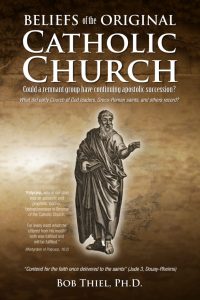
Now, our book, Beliefs of the Original Catholic Church, documents from the Bible as well as from historical sources accepted by the Roman and Eastern Orthodox Catholic Churches, what the original Christian doctrines were, who changed them, when some were changed, and why some were changed.
If you are interested in church history and what happened with the original church, you really should read the book, which is available free online at the following link: Beliefs of the Original Catholic Church.
The Continuing Church of God is NOT Greco-Roman Catholic, but neither is it Protestant.
For some of the reasons why we are NOT Protestant, as well as why Protestantism does NOT really base a lot of its doctrines on the Bible, check out the free eBook, Hope of Salvation: How the Continuing Church of God Differs from Protestantism.
We also have the following related video:
Which Church Would ChatGPT Choose?
Could an Artificial Intelligence program like ChatGPT pick the true Christian church or at least provide information to assist people interested in knowing that. Dr. Thiel asked ChatGPT to compare the teachings of the Continuing Church of God to those of the Roman Catholic Church. It provided a summary of doctrinal differences and conclusions. Dr. Thiel read some of the doctrines and cited scriptures and historical matters to show which church held to the original beliefs. He also explained that the Continuing Church of God was not Protestant and has apostolic succession. He also referred to a variety of free eBooks available at www.ccog.org for those who wanted more details and information on many of the original Christian doctrines. Here is what ChatGPT stated as part of its conclusion: ” From a deductive and doctrinal standpoint: The Continuing Church of God claims continuity with early Christianity and rejects what it views as post-apostolic additions by the RCC. The Roman Catholic Church asserts itself as the original, continuous Church founded by Christ, with authority to define doctrine through time. Which one is “correct” depends on: Whether you accept Scripture alone as the final authority (CCOG view), Or you accept the authority of tradition and the Church hierarchy (RCC view).” Dr. Thiel then cited the words of Jesus, and the writings of the Apostles Paul and Jude and encouraged people to prove all things and contend for the original Christian faith. A faith that the Continuing Church of God teaches and practices.

Here is a link to our video: Which Church Would ChatGPT Choose?
If Pope Leo XIV and others properly revere the word of God and properly utilize AI, they also would want to support the Continuing Church of God.
Some items of possibly related interest may include:
Beliefs of the Original Catholic Church: Could a remnant group have continuing apostolic succession? Did the original “catholic church” have doctrines held by the Continuing Church of God? Did Church of God leaders uses the term “catholic church” to ever describe the church they were part of? Here are links to related sermons: Original Catholic Church of God?, Original Catholic Doctrine: Creed, Liturgy, Baptism, Passover, What Type of Catholic was Polycarp of Smyrna?, Tradition, Holy Days, Salvation, Dress, & Celibacy, Early Heresies and Heretics, Doctrines: 3 Days, Abortion, Ecumenism, Meats, Tithes, Crosses, Destiny, and more, Saturday or Sunday?, The Godhead, Apostolic Laying on of Hands Succession, Church in the Wilderness Apostolic Succession List, Holy Mother Church and Heresies, and Lying Wonders and Original Beliefs. Here is a link to that book in the Spanish language: Creencias de la iglesia Católica original.
Hope of Salvation: How the Continuing Church of God Differs from Protestantism The CCOG is NOT Protestant. This free online book explains how the real Church of God differs from mainstream/traditional Protestants. Several sermons related to the free book are also available: Protestant, Baptist, and CCOG History; The First Protestant, God’s Command, Grace, & Character; The New Testament, Martin Luther, and the Canon; Eucharist, Passover, and Easter; Views of Jews, Lost Tribes, Warfare, & Baptism; Scripture vs. Tradition, Sabbath vs. Sunday; Church Services, Sunday, Heaven, and God’s Plan; Seventh Day Baptists/Adventists/Messianics: Protestant or COG?; Millennial Kingdom of God and God’s Plan of Salvation; Crosses, Trees, Tithes, and Unclean Meats; The Godhead and the Trinity; Fleeing or Rapture?; and Ecumenism, Rome, and CCOG Differences.
The MYSTERY of GOD’s PLAN Why Did God Create Anything? Why did God make you? This free online book helps answers some of the biggest questions that human have, including the biblical meaning of life. Here is a link to three related sermons: Mysteries of God’s Plan, Mysteries of Truth, Sin, Rest, Suffering, and God’s Plan, and The Mystery of YOU.
Universal OFFER of Salvation, Apokatastasis: Can God save the lost in an age to come? Hundreds of scriptures reveal God’s plan of salvation Will all get a fair chance at salvation? This free book is packed with scriptures showing that God does intend to offer salvation to all who ever lived–the elect in this age, and the rest in the age to come. Here is a link to a related sermon series: Universal Offer of Salvation 1: Apocatastasis, Universal Offer of Salvation 2: Jesus Desires All to be Saved, Mysteries of the Great White Throne Judgment (Universal Offer of Salvation part 3), Is God Fair, Will God Pardon the Ignorant?, Can God Save Your Relatives?, Babies, Limbo, Purgatory and God’s Plan, and ‘By the Mouth of All His Holy Prophets’.
Where is the True Christian Church Today? This free online pdf booklet answers that question and includes 18 proofs, clues, and signs to identify the true vs. false Christian church. Plus 7 proofs, clues, and signs to help identify Laodicean churches. A related sermon is also available: Where is the True Christian Church? Here is a link to the booklet in the Spanish language: ¿Dónde está la verdadera Iglesia cristiana de hoy? Here is a link in the German language: WO IST DIE WAHRE CHRISTLICHE KIRCHE HEUTE? Here is a link in the French language: Où est la vraie Église Chrétienne aujourd’hui?
Continuing History of the Church of God This pdf booklet is a historical overview of the true Church of God and some of its main opponents from Acts 2 to the 21st century. Related sermon links include Continuing History of the Church of God: c. 31 to c. 300 A.D. and Continuing History of the Church of God: 4th-16th Centuries and Continuing History of the Church of God: 17th-20th Centuries. The booklet is available in Spanish: Continuación de la Historia de la Iglesia de Dios, German: Kontinuierliche Geschichte der Kirche Gottes, and Ekegusii Omogano Bw’ekanisa Ya Nyasae Egendererete.
CCOG.ORG Continuing Church of God The group striving to be most faithful amongst all real Christian groups to the word of God. There are links to literature is about 160 different languages there.