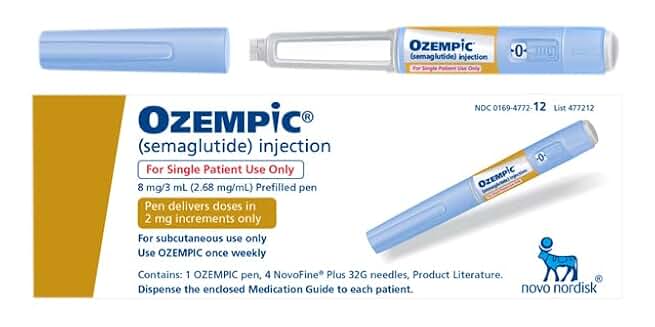
Ozempic Ad (via Amazon)
Obesity remains a major issue for many nations in the West.
About Obesity
Key points
- Obesity is a common, serious, and costly chronic disease.
- In the United States, 1 in 5 children and 2 in 5 adults have obesity. …
Why it matters
Children with obesity are more likely to have numerous health conditions. These include high blood pressure and type 2 diabetes. Children with obesity are also more likely to have obesity as adults. Adults with obesity have a higher risk of developing many diseases. These include heart disease, type 2 diabetes, and some types of cancer. Obesity costs the US healthcare system almost $173 billion a year.
Obesity also affects the nation’s military readiness. Only 2 in 5 young adults are weight-eligible and physically prepared for basic training. https://www.cdc.gov/obesity/php/about/index.html accessed 08/01/26
There are now many advertisements for injectable GLP-1 drugs as the solution, like Ozempic.
Tens of millions of Americans are taking them:
The percentage of U.S. adults who currently take GLP-1 medications for weight loss purposes has risen to 11% in 2026, up significantly from 3% in 2024. And 15% report having used the medicine for weight loss at some point, an increase of nine percentage points. 07/07/26 https://news.gallup.com/poll/712157/glp-usage-reaches-new-high.aspx
Many take them not just because of weight per se, but because of appearance (e.g. https://www.eonline.com/news/1434570/alabama-barker-makes-ozempic-threat-claps-back-on-body-shamers).
But these drugs can affect facial appearance in negative ways.
USA Today reported the following:
Ozempic is giving people ‘temporal hollowing.’ Doctors are sounding an alarm.
You might have heard of “Ozempic face.” But how about Ozempic temples?
In the era of GLP-1 medications, like Ozempic, Wegovy and Mounjaro, plastic surgeons say they’re seeing an increase in patients seeking a niche treatment in a high-risk area of the face. The issue? “Temporal hollowing,” or “temporal wasting” − which, they say, involves loss of volume in the temples, due to rapid weight loss.
And how important, exactly, are full temples to a youthful complexion? Apparently, very.
“A patient will come in and go, ‘Why do I look disturbed? Why do I look suddenly older? What is it about me?’ ” says Dr. Terry Dubrow, a plastic surgeon in Beverly Hills, California, …
The temples are close to the brain, but they’re often the last thing on patients’ minds when they come in for a plastic surgery consultation. Often, surgeons say, patients who have experienced rapid weight loss on GLP-1s say they know something’s different about their face, but they can’t pinpoint what.
Though people rarely notice or think about temples, Dubrow says the fullness of that facial region communicates significant information. Slight changes in depth can make someone look older or even dehydrated, he says.
“It takes your face out of its youthful balance,” he says. “When you look at a youthful face − when you look at kids, babies − the temple area is very full.”
In short, he adds, temporal hollowing is the “hallmark of aging, hallmark of illness, hallmark of dehydration and the absolute hallmark of the Ozempic face.”
But overcorrecting temporal hollowing by adding too much fat or filler can cause problems as well, says Dr. Krishna Vyas, a plastic surgeon at Blechman Plastic Surgery. https://www.usatoday.com/story/life/health-wellness/2026/07/31/ozempic-temporal-hollowing/91113282007/
Yes, these weight loss drugs can make you look strange and even older.
Beyond appearance, are they safe?
Notice the following from Natural News:
Ozempic’s hidden dangers: Muscle loss, mental health warnings and the rebound effect
June 7, 2025
- Ozempic/Wegovy users risk losing muscle, bone mass and mental health as severe side effects.
- GLP-1 drugs linked to 62,000 adverse events and 162 deaths since 2018, with soaring post-2022 reports.
- 71% of users report difficulty affording the drugs despite some insurance coverage.
- Over 40% of diabetics and 22% of overweight Americans use GLP-1 agonists, fueling debate over Medicare’s coverage.
- Experts urge natural alternatives and caution against long-term or high-dose use.
By 2025, Ozempic and Wegovy had become household names, with 1 in 8 Americans relying on GLP-1 receptor agonists like semaglutide to slim down. Yet experts warn that these drugs may cost more than excess pounds: a recent study highlights severe risks to muscle mass, mental health and long-term wellbeing. Dr. Benjamin Bikman of Brigham Young University, highlighting the dangers of Ozempic’s rise, predicts a tidal wave of consequences — frailty, depression, and a “rebound effect” where users regain unhealthy fat. With 162 deaths tied to the drug and 62,000 adverse events since 2018, the question isn’t just whether Ozempic works but at what price.
The triple threat: Muscle loss, bone frailty and shorter lifespans
GLP-1 drugs achieve rapid weight loss by altering physiology, but the tradeoff may be lethal. A 2022 clinical trial found Ozempic users shed 23 pounds of fat after 68 weeks — but also lost 15 pounds of lean muscle mass, risking bone fragility and premature death. Dr. Bikman cautions: “Frail people are much more likely to die young.” Low muscle mass amplifies vulnerability to infections, while bone density decline raises fracture risks. For seniors, these effects could erode independence and survival odds.
The FDA has yet to mandate warnings for muscle or bone atrophy, despite mounting evidence. While marketed as a solution to obesity, Ozempic’s design undermines the body’s foundation, swapping dangerous fat loss for biologically critical tissue. “This goes beyond vanity — it’s losing the ability to survive,” says Dr. Bikman. …
The rebound effect: Why Ozempic can make you fatter
Quitting isn’t an exit strategy — it’s a trigger. After stopping, users regain up to two-thirds of lost weight within a year, but with a worse fat-to-muscle ratio. A 2022 trial found discontinuation led to renewed appetite cravings, while lost muscle rarely returned. Worse, Ozempic spurs fat-cell growth, creating a body primed to hoard fat. “You end up with more fat than when you started, just in smaller packages,” explains Bikman.
Northwestern University researchers found post-Ozempic users saw surging cholesterol levels and heart risks, worsening their health. This rebound effect undermines Ozempic’s promise, transforming it from tool to trap. https://www.naturalnews.com/2025-06-07-ozempics-hidden-dangers-muscle-loss-mental-health-warnings.html
Notice also:
New Zealand’s government gives the green light for weight loss injections despite serious health risks reported in the UK and the US
7 April 2025
A 2025 study conducted at Washington University found a doubled risk of pancreatitis, an 11% increase in the risk of arthritis, and elevated risks of low blood pressure and serious kidney disease among 215,000 users of injectable obesity drugs such as Ozempic, Wegovy and Mounjaro.
In the UK at the beginning of this year, it was reported that the number of people who had been hospitalised due to side effects of the injectable weight loss drugs had skyrocketed.
Despite the warning signs that the injections are causing harm, the New Zealand Government has approved the weight loss drug Wegovy, with Associate Health Minister David Seymour calling it a “game changer.”
Note: Wegovy, Ozempic, and Mounjaro are injectable medications used for weight management and diabetes control. Wegovy and Mounjaro are primarily used for weight management, while Ozempic is mainly used for diabetes management.
Wegovy and Ozempic contain semaglutide, an anti-diabetic medication used for the treatment of type 2 diabetes and an anti-obesity medication. Mounjaro contains tirzepatide, a medication used to treat type 2 diabetes and obesity in adults. …
The results of a 2025 study of 215,000 users conducted at Washington University has been published by Nature Medicine under the title ‘Obesity drugs: huge study identifies new health risks’. Whilst confirming that the injectable drugs can assist weight loss and reduce the impact of a number of associated illnesses such as stroke, heart disease and diabetes, they described the risk reduction as modest. Significantly, researchers found a wide range of serious adverse effects. These included a doubled risk of pancreatitis, an 11% increase in the risk of arthritis and an elevated risk of low blood pressure and serious kidney disease. https://expose-news.com/2025/04/07/nz-gov-approves-wegovy/
First do no harm?
While there might be a place for these medications, these drugs are harmful.
There are issues with these drugs.
In my view, what pharmaceutical companies often do is, “First look at the possible market.”
And second, “How much money can we make if we come up with a drug related to it?”
That is based on many things, including my own interactions with a couple of the world’s largest pharmaceutical companies in the past.
One reason that we do not seem to hear a lot about the negative effects of these injectable drugs is because the media gets a lot of advertising money from the pharmaceutical industry.
The Bible warns:
10 For the love of money is a root of all kinds of evil, (1 Timothy 6:10)
And sadly the pharmaceutical industry, and much of the mainstream media, is directed by love of money over many things.
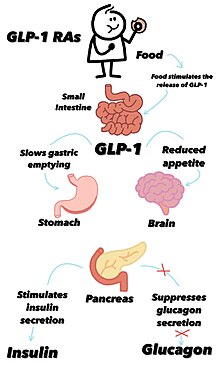
Chart of Semaglutide Impacts
(Source Myluckynumber7 via Wikipedia)
Wikipedia has the following:
Semaglutide is an anti-diabetic medication used for the treatment of type 2 diabetes and an anti-obesity medication used for long-term weight management.[22][23][24] It is a peptide similar to the hormone glucagon-like peptide-1 (GLP-1), modified with a side chain.[25][26] It can be administered by subcutaneous injection or taken orally.[13][14][15][27] It is sold by Novo Nordisk under the brand names Ozempic[13] and Rybelsus[14] for diabetes, and under the brand name Wegovy for weight management and weight loss.[12][15]
Semaglutide is a glucagon-like peptide-1 receptor agonist.[13][14][15] The most common side effects include nausea, vomiting, diarrhea, abdominal pain, and constipation …
Possible adverse effects include nausea, diarrhea, vomiting, constipation, abdominal pain, headache, fatigue, indigestion/heartburn, dizziness, abdominal distension, belching, hypoglycemia (low blood glucose) in people with type 2 diabetes, flatulence, gastroenteritis, and gastroesophageal reflux disease (GERD).[15] It has in the past been suspected to cause pancreatitis, and can cause gastroparesis, and bowel obstruction.[34] Among people who were prescribed a GLP-1, 0.1% were diagnosed with gastroparesis at least six months later, which equates to a 52% increased risk of being diagnosed with gastroparesis while on a GLP-1 medication.[35] A 2019 meta-analysis did not indicate a significantly elevated risk of acute pancreatitis.[36]
The US Food and Drug Administration prescription label for semaglutide contains a boxed warning for thyroid C-cell tumors in rodents.[13][14][15][28] It is unknown whether semaglutide causes thyroid C-cell tumors, including medullary thyroid carcinoma, in humans. (Semaglutide. Wikipedia, accessed 06/07/25)
Notice that the drugs are SIMILAR to GLP-1–they are not the same. Even when isolate chemicals are supposedly the same, they do not always have the same effect in the human body (An Overview of Vitamin E Efficacy. VERIS Research Information Service, November 1998).
The injectable drugs somewhat remind me of many synthetic vitamins that are SIMILAR to the real thing, but not the real thing. Folic acid, to name one, comes to mind. While folates are natural, folic acid is not–and folic acid has been implicated in various human cancers (see Folic Acid Dangers).
Let me also add that my clinical experience is that there are safer and better ways to deal with blood sugar matters than prescription drugs as well.
But financial considerations have long pushed the pharmaceutical industry.
That said, many years ago, the Continuing Church of God put out a video about concerns about eating to much on our YouTube channel called Bible New Prophecy. Here is a link to our video: Eating Right, Eating Too Much, and Prophecy.
But yes, losing weight can be very, very difficult. But real Christians should believe the following:
13 I can do all things through Christ who strengthens me. (Philippians 4:13)
With prayer and proper determination, breaking away from being obese can happen.
The Bible teaches:
5 Trust in the Lord with all your heart,
And lean not on your own understanding;
6 In all your ways acknowledge Him,
And He shall direct your paths.7 Do not be wise in your own eyes;
Fear the Lord and depart from evil.
8 It will be health to your flesh,
And strength to your bones. (Proverbs 3:5-8)
32 Do not fear, little flock, for it is your Father’s good pleasure to give you the kingdom. (Luke 12:32)
Do not let fear stop you from moving ahead.
Take proper action (cf. Galatians 6:9-10; Revelation 3:7-13; Zephaniah 2:1-3).
Interested in a spiritual ‘five second’ rule?
Tell yourself and pray:
I will act on the truth and not put it off because I do not feel like it. Jesus help me.
Most people can quietly pray that in 5 or so seconds.
And physically if it will help, you can count backwards from five or use some other technique to motivate you to do what is right–including with your diet. But then pray for God’s assistance.
You can eat less–take it one day at a time consistent Jesus’ words in Matthew 6:34, which when you are trying to lose weight may also mean one meal or snack desire at a time.
We also have a related video on changing your life. Here is a link to the video: ‘How to Change Your Life in 5 Seconds’.
Of course, some things take longer than 5 seconds. But asking Jesus to help you not overeat is something everyone can do.
While it may not help your weight much, exercising is good for you and your innate immune system. Related to exercise, the Continuing Church of God (CCOG) put out the following video on our Bible News Prophecy YouTube channel: The Plain Truth About Exercise.
Related to food, we put out the following video: Let’s Talk About Food.
Related to Christian health, we put out the following video: Let’s Talk About Health.
We also have the following obesity related video:
In March 2024, the BBC reported that research was pointed to over a billion people being obese worldwide. Professor Majid Ezzati, of Imperial College London, said “In many of these island nations it comes down to the availability of healthy food versus unhealthy food. In some cases there have been aggressive marketing campaigns promoting unhealthy foods, while the cost and availability of healthier food can be more problematic.” Does the Bible teach to eat what is good? While millions are dying from hunger, over a billion are obese. What are diseases that the obese are more susceptible to? Since the obese tend to die sooner than others, should obesity be accepted or encouraged? What did Bill Maher state about the ‘body positive movement’? Does the Bible condemn gluttony (overeating) and obesity? Did Jesus say to ‘come as you are’ or to ‘repent and believe’? What are some ways to help lose weight? Is losing weight very difficult? Can Jesus help? If you fail, should you give up? What about the five second method of changing? Should the obese eat less? If that does not work, what should they do? What about exercise? Steve Dupuie and Dr. Thiel address these issues.

Here is a link to the video: Is Obesity OK with Scripture?
The word of God condemns gluttony and obesity.
However, for many reasons, look for ways other than GLP-1 drugs to solve this.
If you are obese that is something, with God’s help, you need to work on.
Some items of possibly related interest may include:
Christian Health Matters Should Christians be concerned about their health? Does the Bible give any food and health guidelines? Here are links to three related sermons: Let’s Talk About Food, Evil is Affecting the Food Supply, and Let’s Talk About Health.
Obesity, processed foods, health risks, and the Bible Does the Bible warn about the consequences of being obese? Is overeating dangerous? Is gluttony condemned? What diseases are associated with eating too much refined foods? Two related video would be Is Obesity OK with Scripture? and Eating Right, Eating Too Much, and Prophecy.
Should Christians Exercise? What does the Bible teach? What are some of the benefits and risks of exercise? Here is a link to a related video: The Plain Truth About Exercise.
Ten Simple Rules that Lead to Health Herbert Armstrong gives his opinions on this.